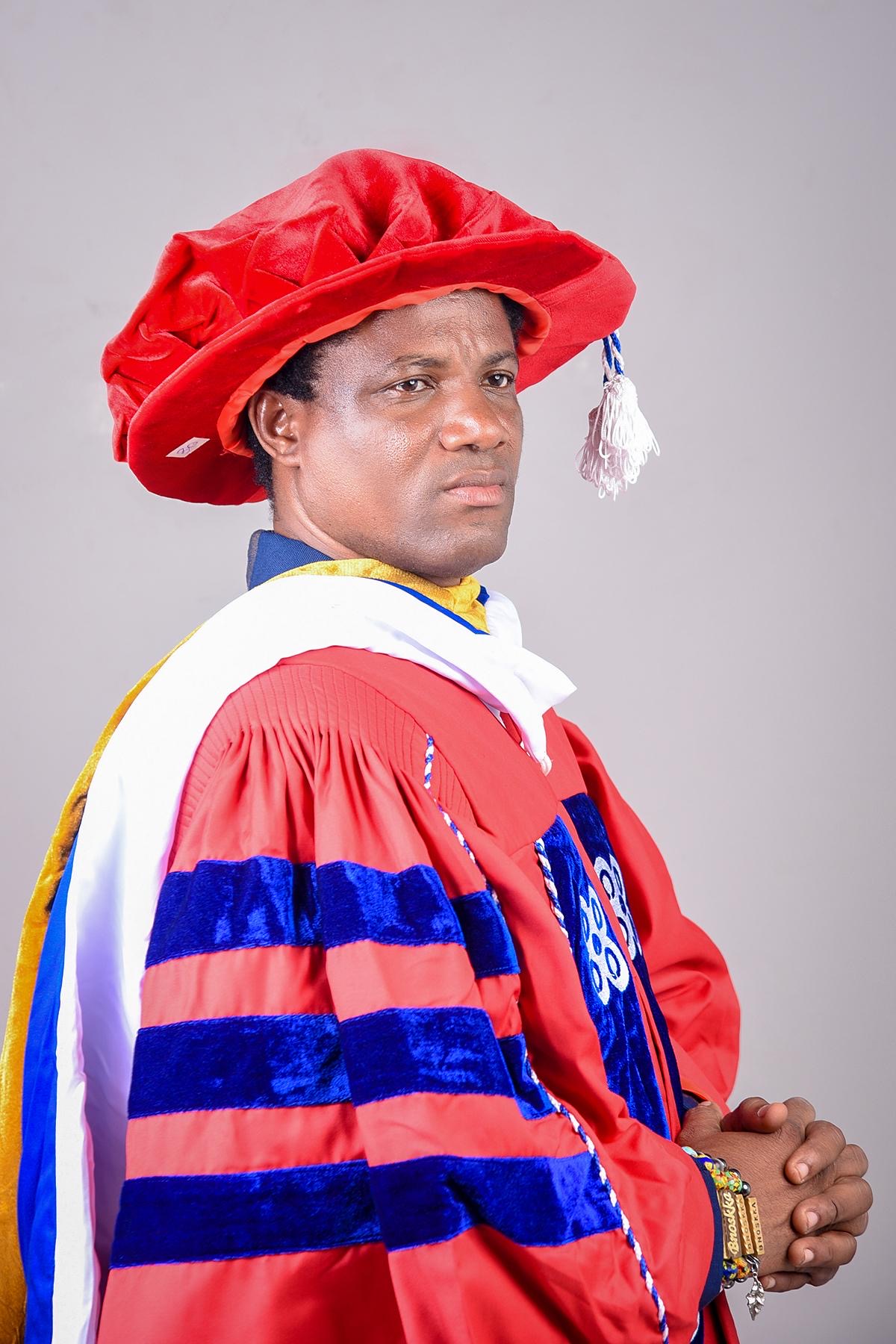
A leading voice in Ghana’s creative arts sector, Dr. Benjamin Oduro Arhin Jnr, popularly known as Bnoskka, has urged the public to channel the outrage generated by recent comments from the Kumasi Metropolitan Assembly (KMA) Mayor into a constructive inquiry into the state of the Creative Arts School project in Kumasi.
Speaking passionately on Asempa FM during a live interview hosted by Adu Kumi, Bnoskka, a Creative Arts Business Development and Intellectual Property Consultant and Lecturer at the University of Education, Winneba’s School of Creative Arts, redirected the conversation from personal criticism of the mayor toward systemic accountability .
“While we have all reacted to Mayor King Zuba’s comments, we should use this moment to question the current state of the Creative Arts School. We need to probe why it’s not completed, especially when Hon. Okraku Mantey, during his tenure, stated clearly that the contractor has been paid,” Bnoskka asserted.
His remarks come in the wake of widespread controversy triggered by Mayor Richard Ofori Agyemang Boadi (“King Zuba”), who reportedly described the incomplete Creative Arts School facility as “not necessarily a priority” during an interview on Oyerepa FM, sparking outrage across the creative community .
A Scholar-Pundit’s Call for Accountability
Bnoskka, who holds a PhD and an LLB, operates at the critical intersection of creativity, law, and commerce . His unique position as both an academic and a practitioner gives his commentary rare depth—moving beyond mere opinion to offer evidence-based analysis and actionable frameworks for industry growth .
He has long been recognised as a pivotal advocate for a structured, prosperous, and rights-aware creative ecosystem in Ghana. Through his consultancy work, he empowers artists, cultural entrepreneurs, and creative enterprises to navigate the complexities of the modern creative economy, transforming artistic talent into sustainable and legally protected ventures .
His intervention on Asempa FM was therefore not merely a reaction to controversy but a strategic call for accountability. “If public funds have been disbursed, Ghanaians deserve to know where the money went and why the project has stalled. This is not about defending or attacking any individual—it is about ensuring that commitments to our creative infrastructure are honoured,” he explained.
The Creative Arts School Project: A Flagship Initiative
The Creative Arts School in Kumasi was launched as a flagship initiative under the previous administration, intended to provide dedicated infrastructure for training young creatives in music, drama, visual arts, and dance. However, years after its announcement, the facility remains incomplete, a situation Bnoskka describes as “a national embarrassment.”
He reminded listeners that former Minister for Tourism, Arts and Culture, Hon. Mark Okraku Mantey, had publicly assured the nation that contractors had been paid and that work would progress. “We cannot simply move on to the next controversy without holding duty-bearers accountable for what has already been said and promised,” Bnoskka stated.
Bnoskka’s Relevance in Ghana’s Creative Landscape
This intervention is consistent with Bnoskka’s established role as one of Ghana’s most respected voices in creative arts advocacy. A two-time winner of the National Entertainment Pundit of the Year award at the Foklex Media Awards (2023/2024 and 2024/2025 editions) and a nominee for the prestigious 2025 Radio and Television Personality (RTP) Awards, he has built a reputation for combining academic rigour with practical industry insight .
His influence extends beyond commentary. As a National Expert for the UNESCO-Aschberg Programme for Artists and Cultural Professionals, he has contributed to shaping policies aimed at strengthening the social and economic rights of creators worldwide . Domestically, he regularly organises public lectures, seminars, and workshops that demystify complex areas like trademark laws, copyright, and business models for creatives .
Colleagues and industry observers often describe him as “the bridge between the creative mind and the marketplace,” noting his unique ability to translate legal and academic rigor into accessible guidance for musicians, filmmakers, and visual artists .
The Way Forward
Bnoskka urged creative industry stakeholders, civil society, and the media to pursue the matter with the Parliamentary Select Committee on Education and the Ministry of Tourism, Arts and Culture.
“Let us not waste this moment,” he concluded. “The mayor’s comment was a spark, but the fire should illuminate the truth about our Creative Arts School. Our creative youth deserve answers, and more importantly, they deserve the infrastructure promised to them.”
As the debate continues, Bnoskka’s measured but firm intervention has refocused attention on governance, accountability, and the long-term vision for Ghana’s creative economy, issues far larger than any single political figure’s remarks.