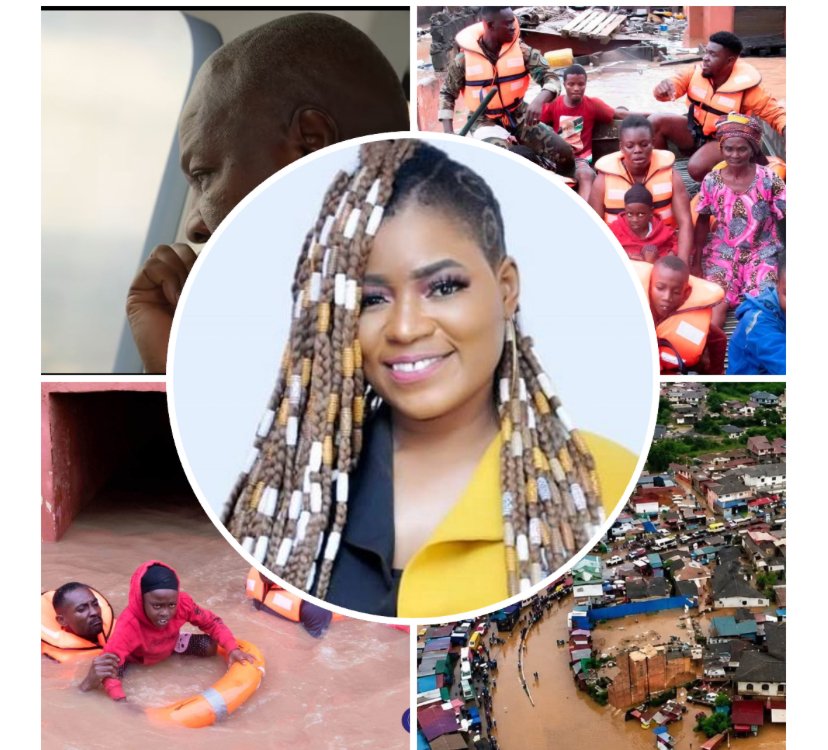
In the wake of the recent catastrophic flooding that has plunged parts of Ghana into despair, beloved philanthropist, musician, and celebrity Shatana has lent her influential voice to the national conversation, calling for urgent action and compassion.
Shatana expressed deep worry over the unfolding tragedy and offered her heartfelt condolences to families who lost loved ones and to all those who suffered the destruction of their homes and properties. Known for her warmth and empathy, the affable star did not stop at sympathy. She also shared practical, forward-thinking solutions to help mitigate future disasters.
According to Shatana, the most effective long-term approach to managing excessive rainfall and preventing it from turning into deadly floods lies in modern infrastructure. She strongly advocated for the construction of underground drainages, efficient sewage systems, and tunnels to properly channel stormwater. While demolishing structures built in waterways may offer temporary relief, she emphasized that sustainable engineering solutions represent the best path forward.
Beyond prevention, Shatana highlighted essential personal safety measures for individuals living in flood-prone areas. She stressed the life-saving importance of life jackets, which can keep people afloat even if they cannot swim during sudden flooding. She also recommended ‘Wellington boots’ (rain boots) as critical protective gear to shield against electrocution from live wires submerged in water and to guard against dangerous animals that may lurk in floodwaters.
In a thoughtful and inclusive gesture, Shatana went a step further by demonstrating the correct use of both life jackets and Wellington boots. She clearly explained the concepts in both Ga and Akan languages to ensure her message reached a wider audience across different communities.
In her closing appeal, Shatana called on the government, spiritual leaders, traditional authorities, and other stakeholders to collaborate in procuring and distributing these essential relief items to residents in flood-prone zones.
“Natural disasters are unpredictable,” she noted, “but with proper preparation, we can save lives when the floods inevitably come.”